
Kevin Rudd

Introduction
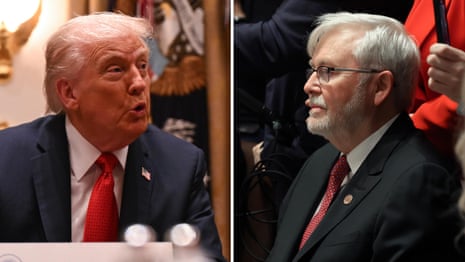
Kevin Rudd is one of Australia’s most significant political figures of recent decades, having served as Prime Minister, then later transitioned into diplomacy as Australia’s Ambassador to the United States. In 2025, he finds himself at the centre of a diplomatic spotlight following a public exchange with former U.S. President Donald Trump — an incident shedding light on the complexities of international relations, personal history and modern diplomacy.
Background: Political & Diplomatic Career
-
Kevin Michael Rudd was born on 21 September 1957 in Nambour, Queensland, Australia. (Wikipedia)
-
He studied at the Australian National University, graduating in Chinese studies and later earning a DPhil from Oxford. (Wikipedia)
-
Rudd served as the 26th Prime Minister of Australia from December 2007 to June 2010, and again briefly in 2013. (Wikipedia)
-
In March 2023, he became Australia’s Ambassador to the United States, appointed by Prime Minister Anthony Albanese. (Wikipedia)
-
He is known for being fluent in Mandarin, and his early career involved significant engagement with Asia-Pacific policy. (Wikipedia)
Recent Incident Creating Headlines (2025)
In October 2025, during a high-profile meeting in Washington DC between Trump, Albanese and Australia’s delegation, Kevin Rudd was involved in an awkward public moment:
-
A journalist asked President Trump about Rudd’s past comments critical of him. Trump responded, “I don’t know anything about him… Is he still working for you?” He then directed to Rudd, “I don’t like you either. And I probably never will.” (Politico)
-
Rudd attempted to explain the comments were made before his appointment as ambassador. (www.ndtv.com)
-
The remark created a ripple of reactions: some laughter in the room, some diplomatic eyebrows raised, and calls back home in Australia for scrutiny over his role. (Daily Telegraph)
-
Former Prime Minister Malcolm Turnbull publicly defended Rudd, saying he should not be dismissed on that basis, describing Trump’s remark as “tongue-in-cheek”. (ABC)
Why This Matters
-
The incident highlights the fragility and theatrical nature of diplomatic engagements, especially when individual personalities and past statements intersect.
-
Australia’s relationship with the U.S., paired with strategic agreements like those involving critical minerals and the AUKUS partnership, makes the ambassador’s role especially visible. (ABC)
-
For Rudd personally, this event shows how past commentary—especially when publicly voiced—can persist in the diplomatic sphere, influencing perceptions and professional risk.
Looking Ahead: Implications for Rudd and Australia
-
Rudd’s position may face increased scrutiny domestically, especially by political opponents who view the public exchange as a diplomatic embarrassment. (Daily Telegraph)
-
However, concrete outcomes of the Washington meeting (e.g., Australia-U.S. rare-earths/minerals deal) show that the broader strategic relationship remained intact. (The Guardian)
-
Rudd’s expertise with Asia-Pacific affairs and his Mandarin skills continue to make him a key figure in Australia’s foreign-policy architecture.
-
The event may also serve as a cautionary tale for diplomats about the enduring impact of prior public remarks and the need for preparedness in high-stakes bilateral contexts.
Conclusion
Kevin Rudd’s journey—from Queensland bureaucrat to Australian Prime Minister, and now Ambassador in Washington—reflects a multifaceted career steeped in policy, diplomacy and international affairs. The recent exchange with Donald Trump may have been uncomfortable, but it underscores the critical role he plays in shaping Australia’s place on the global stage. As the alliance between Australia and the U.S. continues to evolve, Rudd remains a figure to watch.


0 Comments